
FFAR (Folding-Fin Aircraft Rocket) 2,75’’ Mighty Mouse overhaul & assembly
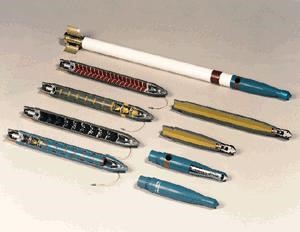
The 2.75-inch FFAR (Folding-Fin Aircraft Rocket) was originally developed by the NOTS as an air-to-air weapon to be used by interceptors against heavy bombers. A salvo of rockets was considered much more effective than a stream of cannon shells. The original rocket model was the MK 4, which was spin-stabilized and featured four flip-out fins around the nozzle. Fitted with a 2.7 kg (6 lb) HE warhead, it was widely used in the 1950s as the Mighty Mouse air-to-air rocket by USAF interceptors like the F-86D Sabre, F-89J Scorpion, F-94C Starfire and F-102A Delta Dagger. Total length of the MK 4 Mighty Mousewas 1.2 m (4 ft), and it weighed 8.4 kg (18.5 lb). Maximum range was around 6000 m (6500 yds), but effective range was more like 3400 m (3700 yds). The rocket’s accuracy was relatively poor, because its speed and spin rate were too low to effectively counter gravity drop, cross winds and dispersion.
Rocket Motor FFAR 2,75’’ Mighty Mouse
- MK-4 / RD 701,
- MK-40/ RD 7010
- MK-66 / RD 702
Warhead FFAR 2,75’’::
- FZ-71 / WD 701 (HE)
- M-151 / WD 702 (HE)
- FZ-32 / WD 703 (Smoke)
- Inert / WD 704 (Practice)
Fuzes for FFAR 2,75’’
| Model | Description |
|---|---|
|
KM423/KM427 |
Point Detonating |
|
MK125 Mod5 |
Igniter |
|
M423 |
Point Detonating |
|
XM438/M438 |
Point Detonating |
|
Mk 352 Mod 0/1/2 |
Point Detonating |
|
M429 |
Proximity Airburst |
|
M442 |
Airburst, Motor-Burnout Delay |
|
Model 113A |
Airburst, Motor-Burnout Delay |
| MK 4/MK-40 | MK 66 | |
|---|---|---|
|
Length (motor only)* |
99.8 cm (39.3 in) |
105.9 cm (41.7 in) |
|
Weight (motor only)* |
5.0 kg (11.0 lb) |
6.2 kg (13.6 lb) |
|
Diameter |
70 mm (2.75 in) |
70 mm (2.75 in) |
|
Speed |
600 m/s (2000 fps) |
1000 m/s (3280 fps) |
|
Range |
6000 m (6500 yds) |
10000 m (11000 yds) |
|
Propulsion |
Solid-fueled rocket; 3.3 kN (750 lb) for 1.3 s |
Solid-fueled rocket; 6.7 kN (1500 lb) for 1.1 s |
|
Weight before firing |
13.6 lbs. |
11.0 lbs. |
|
Burn time (77° F) |
1.55 - 1.69 seconds |
1.05 - 1.10 seconds |
|
Average thrust |
720 pound |
1,300 - 1,370 pound |
|
Launch spin rate |
1 revolution per second |
9 - 10 per second |
| Warhead | Warhead Type | Fuze Options | Length | Weight |
|---|---|---|---|---|
|
M151 |
Anti-Personnel |
M423, M427, MK 352 |
138.2 cm (54.39 in) |
10.4 kg (22.95 lb) |
|
M156 |
Smoke (White Phosphorus) |
M423, M427, MK 352 |
140.0 cm (55.13 in) |
10.5 kg (23.25 lb) |
|
M257 |
Illumination (visible) |
M423, M427, MK 352 |
140.0 cm (55.13 in) |
10.5 kg (23.25 lb) |
|
M278 |
Illumination (IR) |
M442 |
186.1 cm (73.25 in) |
11.1 kg (24.45 lb) |
|
MK 67 MOD 0 |
Smoke (White Phosphorus) |
M423, M427, MK 352 |
140.0 cm (55.13 in) |
8.5 kg (18.75 lb) |
|
MK 67 MOD 1 |
Smoke (Red Phosphorus) |
M427, MK 352 |
146.8 cm (57.79 in) |
10.2 kg (22.52 lb) |
|
WDU-4A/A |
Flechette |
Model 113A |
142.9 cm (56.25 in) |
10.4 kg (22.95 lb) |
|
WTU-1/B |
Practice |
(n/a) |
140.4 cm (55.30 in) |
10.5 kg (23.10 lb) |
MK-66 / RD 702 ROCKET MOTOR FFAR 2,75’’
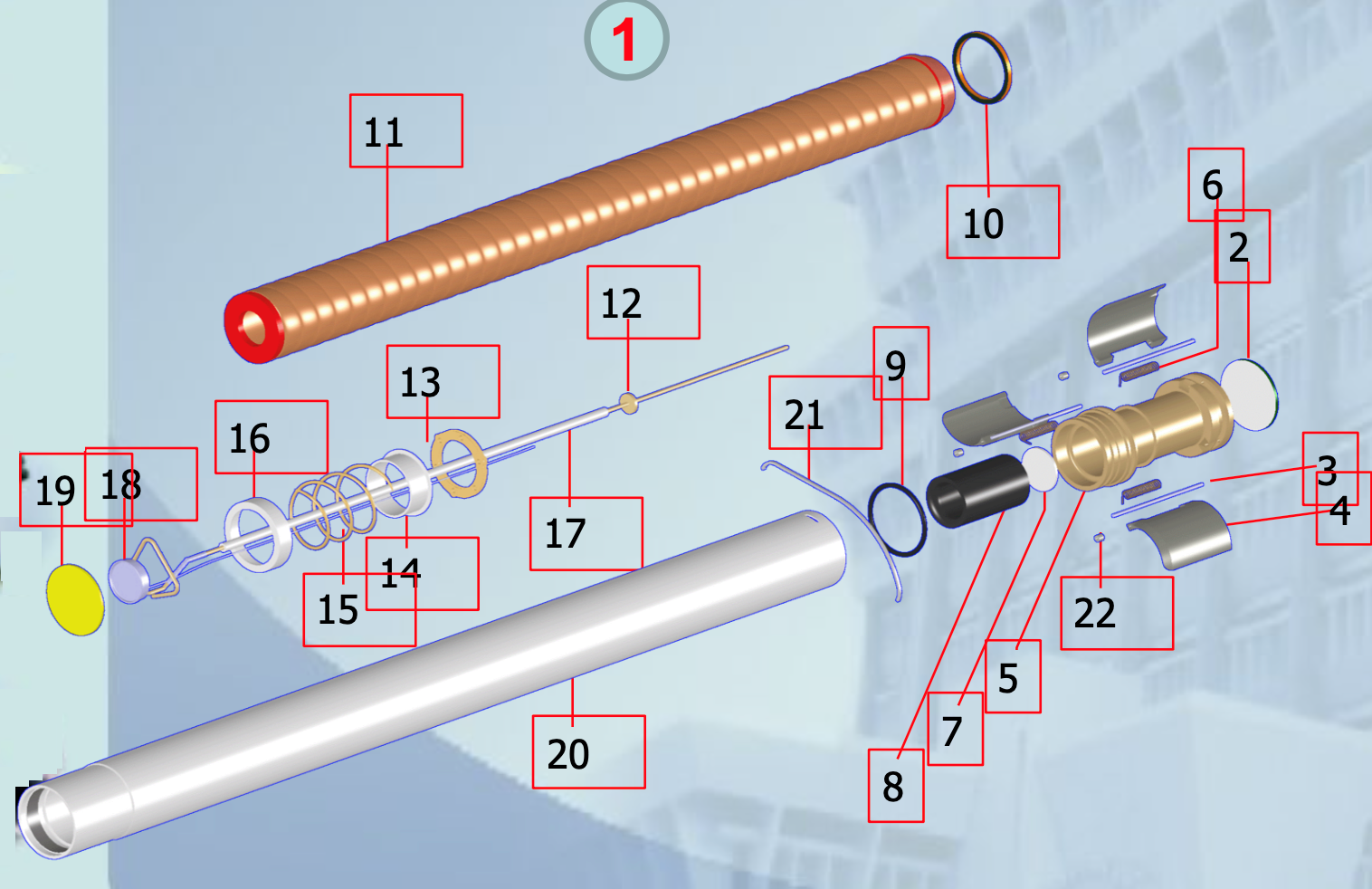
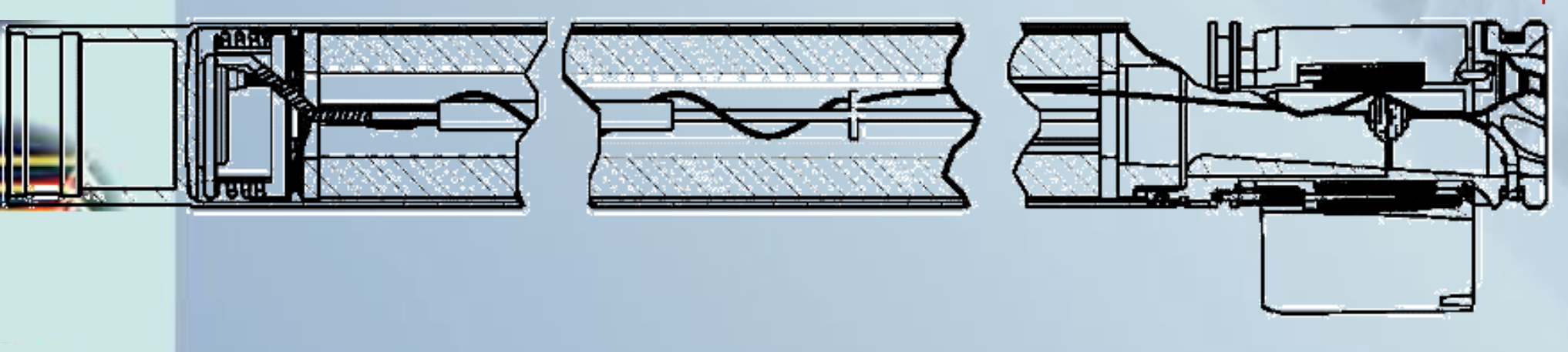
- Shield End
3. Shaft Retainer
4. Fin Blade
5. Nozzle Block
6. Spring, Fin
7. Diaphragm
8. Graphite Coat
9. O-ring
10. Seal Ring
11. Propellant Grain Assembly
12. Washer
13. Spacer Assembly
14. Cover of Spring Box
15. Immobilizer Spring
16.Base of Spring Box
17. Rod, Stabilizing Coating
18. Igniter MK125 Mod5
19. Charge Support Disk
20. Motor Tube 2.75 In. RD 702
21. Lock Wire
22. Spacer Rod
ROCKET MOTOR MK-40/ RD 7010 FFAR 2,75’’
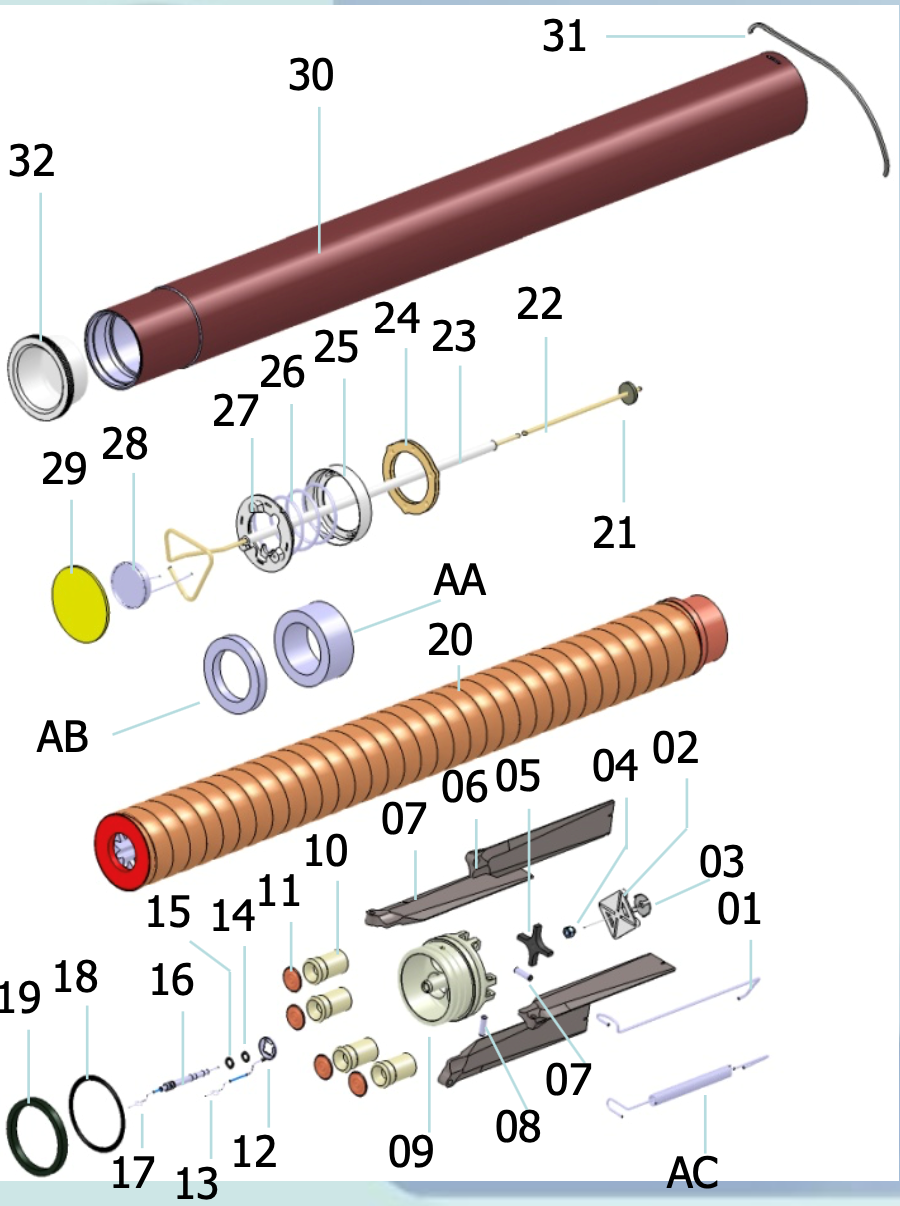

- CHARGE SUPPORT SPACER
AA. CHARGE SUPPORT RING
AC. CLIP SHORTING (ALT)
1 CLIP SHORTING
2 FIN RETANER
3 CONTACT DISC
4 SELF LOCKING NUT
5 CROSS HEAD
6 FIN BLADE
7 FIN PIVOT PIN DRILLED
8 FIN PIVOT PIN
9 NOZZLE PLATE
10 NOZZLE INSERT
11 DIAPHRAGM BURST
12 GROUND CLIP
13 WIRE CONNECTOR TYPE PIDG & ELECTRICAL WIRE
14 “O” RING
15 “O” RING
16 PISTON ASSEMBLY
17 SOLDER SLEEVE & CONTACT LEAD WIRE & WIRE CONTACT
18 PACKING PREFORMED O RING
19 SEAL RING
20 PROPPELANT GRAIN
21 WASHER
22 ROD STABILIZING
23 SALT COATING
24 SPACER
25 COVER OF SPRING BOX
26 IMMOBILIZER SPRING
27 BASE OF SPRING BOX 1
28 IGNITER LOADED ASSY
29 CHARGE SUPPORT DISC
30 MOTOR TUBE 2.75 IN FFAR
31 LOCK WIRE 1
32 SHIPPING PLUG
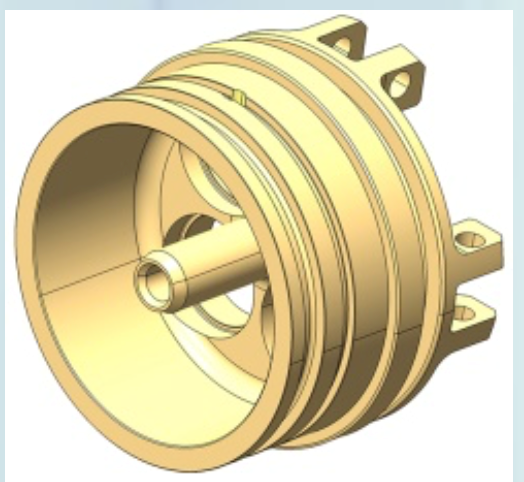
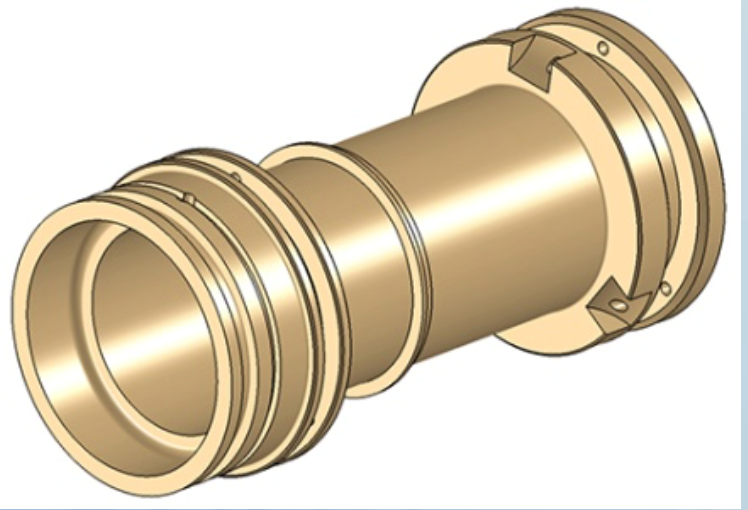
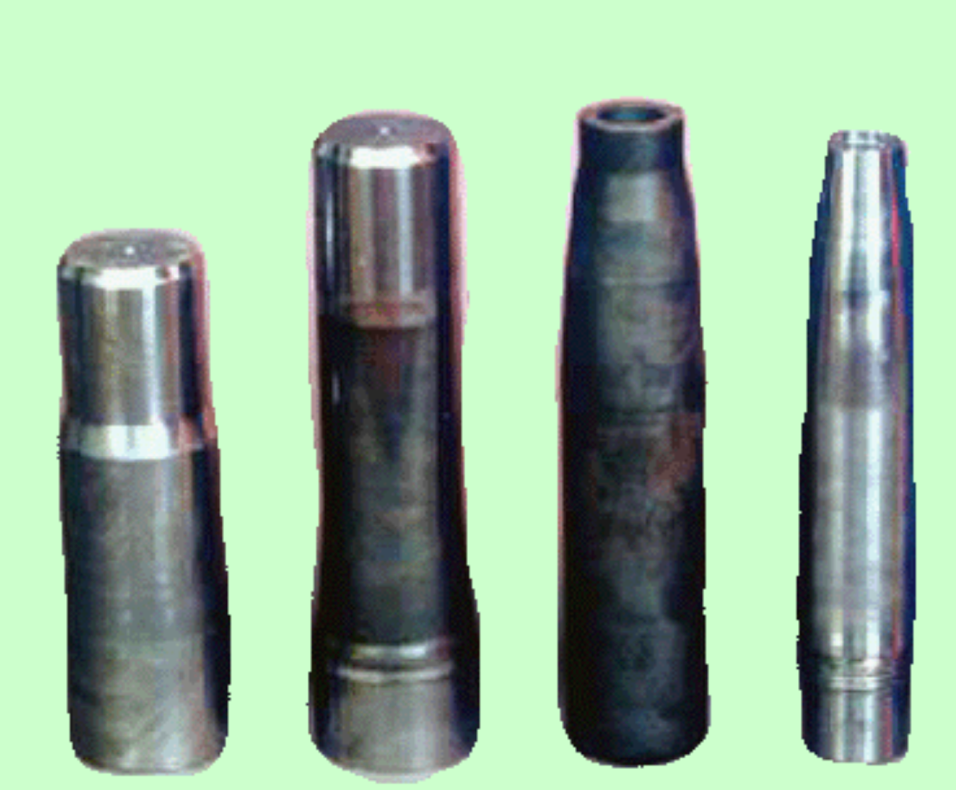
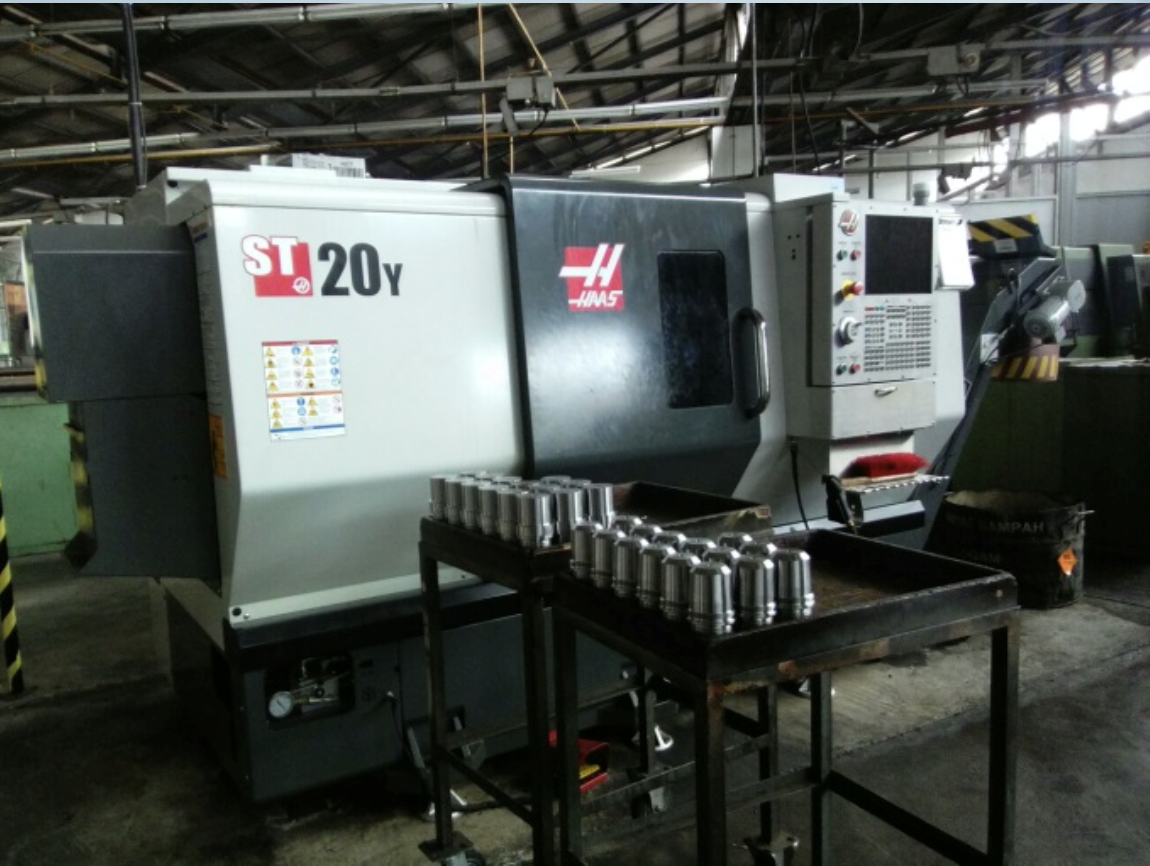
Non Destructive Test Facilities (X-RAY) Destructive Test Facilities Nozzle Plate FFAR 2.75” Nozzle Plate Wrap Around RD-702/MK66 Nozzle Insert 2.75”

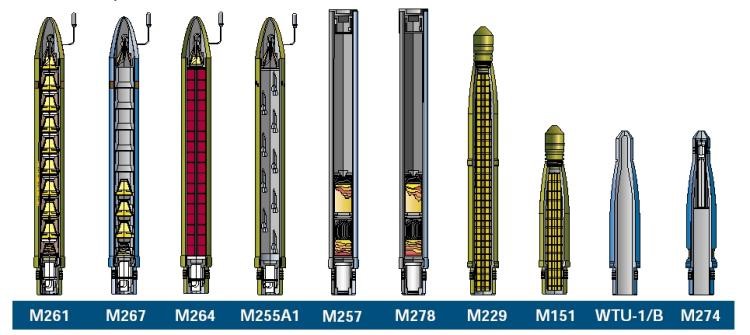
- M151: 3.95 kg (8.7 lb) anti-personnel fragmentation warhead
- M156: White phosphorus smoke warhead
- M229: 7.3 kg (16.1 lb) anti-personnel fragmentation warhead (elongated version of M151)
- M247: Shaped-charge anti-armour warhead
- M255: Flechette warhead; contains about 2500 28-grain (1.8 g) flechettes (M255E1 has 1180 60-grain (3.8 g) flechettes)
- M257: Parachute-retarded battlefield illumination flare
- M259: White Phosphorus smoke warhead
- M261: High-explosive MPSM (Multipurpose Submunition) warhead; contains nine M73 anti-personnel/anti-materiel bomblets, which are released in mid-air, and drag-retarded to fall vertically to the ground
- M264: Red phosphorus smoke warhead
- M267: Practice warhead for M261; contains three M75 practice submunitions
- M274: Practice warhead for M151; contains a smoke signature charge
- M278: Parachute-retarded infrared illumination flare
- MK 67 MOD 0: White phosphorus smoke warhead
- MK 67 MOD 1: Red phosphorus smoke warhead
- WDU-4A/A: Flechette warhead; contains about 2200 20-grain (1.3 g) flechettes
- WTU-1/B: Inert practice warhead
Rocket Warheads
M151 High-Explosive. The M151 HE (diagram) is an antipersonnel, antimaterial warhead and is traditionally referred to as the 10-Pounder. The bursting radius is 10 meters; however, high velocity fragments can produce a lethality radius in excess of 50 meters. The nose section is constructed of malleable cast iron which is threaded to receive the fuze. The base section is constructed of steel or cast iron and is threaded so that it can be attached to the rocket motor. The base section and the rocket motor are welded (brazed) together. Total weight of the loaded, unfuzed, warhead is 8.7 pounds, of which 2.3 pounds is composition B4. The M151 can use M423, M429, or M433 fuzes.
M156 White Phosphorous (Smoke). The M156 (diagram) is primarily used for target marking and incendiary purposes. It ballistically matches the M151 and is of similar construction. Filler for the M156 is 2,2 pounds of WP with .12-pound bursting charge of composition B. The approximate weight of the fuzed warhead is 9.7 pounds. M423 or M429 fuzes can be used with 156.
M229 High-Explosive. The M229 HE (diagram) warhead is currently in the inventory. An elongated version of the M151, it is commonly referred to as the 17-Pounder. The M229 filler consists of 4.8 pounds of composition B4 and can use the same fuzes as the M151. Its unfuzed weight is 16.4 pounds.
M247 High-Explosive, Dual-Purpose. The M247 (diagram) is no longer in production; however, some of these warheads may still be found in war reserve stockage. With a shape charge for antiarmor capability, the M247 employs a cone-shaped charge like that of the M72 LAW. The point-initiated detonating fuze is an integral part of the warhead. The weight of the M247 is 8.8 pounds, of which 2.0 pounds is composition B.
M257 Illumination. The M257 (diagram) illumination warhead provides one million candlepower for 100 seconds or more. It can illuminate an area in excess of one square kilometer at optimum height. A deployed main parachute descent is approximately 15 feet per second. An M442 integral fuze provides a standoff range of approximately 3,000 meters with the MK40 motor and approximately 3,500 meters with the MK66 motor. The weight of the M257 is 10.8 pounds, of which 5.4 pounds is magnesium sodium nitrate.
M259 Smoke-Screening (White Phosphorous) The M259 (diagram) smoke-screening warhead is in inventory but is not currently being produced. It provides the capability to produce tactical smoke screens. With conditions favorable to smoke operation, 14 rockets can produce an effective smoke screen for 5 minutes. With a motor burnout fuze (M446) and an MK40 motor, the warhead can provide a stand-off range of 2,500 to 3,000 meters. The weight of the warhead is 8.8 pounds. An improved smoke warhead, the M264 smoke screen (red phosphorous) is in development to replace the M259. The M264 will employ the M439 fuze.
M261 High-Explosive Multi-purpose submunition. The MPSM HE (diagram) warhead provides improved lethal effectiveness against area targets such as light armor, wheeled vehicles, material, and personnel. It has a plastic nose cone assembly, an aluminum warhead case, an integral fuze, an expulsion charge, and nine M73 (diagram) submunitions. The primary warhead fuze (M439) is remotely set with the ARCS, MFD, or RMS to provide range (time of flight) from 500 meters to approximately 7,000 meters. On the AH-1, the RMS is programmable only from 700 meters to 6,900 meters.
Initial forward motion of the rocket at firing initiates fuze timing. At fuze time an at a point before and above the target, depending on the launch angle and range, the expulsion charge is initiated. The SMs are separated by ejection, and arming occurs when the RAD (ram air decelerator) deploys. The RAD virtually stops forward velocity and stabilizes the decent of the SM. An M230 omnidirectional fuze with an M55 detonator is used on each SM and is designed to function regardless of the impact angle.
Each SM has a steel body which has a 3.2-ounce shaped charge of composition B for armor penetration. The SM is internally scored to optimize fragments against personnel and material. Upon detonation, the shaped charge penetrates in line with its axis and the SM body explodes into high velocity fragments (approximately 195 at 10 grains each up to 5,000 feet per second) to defeat soft targets. The fuzed weight of the M261 is 13.6 pounds.
M267 MPSM Smoke Signature (Training). The M267 MPSM (diagram) training warhead operationally, physically, and ballistically matches the M261. Three M75 practice SMs and six inert SM load simulators take the place of nine HE submunitions in the M261 warhead. Like the M274, each of the three practice SMs contains approximately 17 grams ( 0.6 ounces of pyrotechnic powder. An M231 fuze with an M55 detonator is used with practice SMs.
M274 Smoke Signature (Training). The M274 (diagram) smoke signature training rocket provides a ballistic match for the M151HE warhead. The casing is a modified WTU-1/B with vent holes or blowout plugs. A modified M423 fuze mechanism is integral to the warhead. A cylindrical cartridge assembly is in the forward section of the casing; it contains approximately 1.4 ounces of potassium perchlorate and aluminum powder which provides a “flash, bang, and smoke” signature. The M274 weighs 9.3 pounds.
Flechette, WDU (4A/A). The 4A/A (diagram) flechette is not currently in production. Used primarily for antipersonnel operations, this warhead contains approximately 2,200 twenty grain flechettes. The flechettes are released by a base-mounted, fuze-ignited (integral fuze) expulsion charge at rocket motor burnout. Fuzed weight of the flechette is 9.3 pounds.
The M255E1 flechette warhead, which contains approximately 1,180 sixty-grain hardened steel flechettes, is in limited production. It has possible air-to-air as well as air-to-ground application. The M255E1 is designed for use with the M439 fuze.
Fuzes
M423 Point-Detonating. The M423PD (diagram) fuze is an oblique sensitive, point-detonating, superquick fuze used as a common component with the M151. The safety and arming device forward of the booster housing (explosive charge) contains an unbalanced rotor. Upon acceleration of the rocket at firing, a weight setback occurs in the unbalanced rotor assembly which houses the primer and detonator. This setback places the fuze into an armed condition when the rocket has traveled approximately 43 to 92 meters from the launcher.
M429 Proximity. Currently in inventory, the M429 (diagram) proximity fuze is a transistorized, continuous-wave, doppler device that provides airburst functioning for improved antipersonnel effectiveness. The arming mechanism of the M429 is similar to the one in the M423 except that it has been modified to include a battery and an electric detonator. Once it is armed and the reflected signals reach a specific intensity, the firing circuit is initiated through a capacitor to the electric detonator that provides the airburst function. A superquick impact switch serves as a backup to the airburst electronics.
M433 Resistance Capacitance. The M433 (diagram) RC fuze is a nose-mounted, multi-option time delay fuze with selectable functioning modes. A superquick setting is used for open terrain; a forest penetration mode permits a selectable time delay range (10 to 45 meters in 5-meter increments) set for the height of the forest canopy. After first contact with the forest, a delay timer is activated to provide warhead functioning. The bunker or building penetration mode provides up to 10 feet of penetration before detonation. The target penetration RC timer is activated by a point-mounted probe switch that is initiated by target contact. An umbilical assembly is positioned on the nose of the fuze for interface through the launcher and the RMS or the ARCS and the aircraft. When the trigger is pulled, aircraft voltage is supplied to the fuze and time delay is initiated as selected by the pilot.
M439 Resistance Capacitance. The M439 RC (diagram) fuze is a base-mounted, electronic-variable, time-delay fuze with an RC delay circuit. Designed for cargo and flechette warheads, the M439 allows the pilot to set the fuze remotely for airburst functioning at the desired range from 500 to approximately 7,000 meters. A fuze capacitor is charged by the RMS, ARCS or MFD through an umbilical assembly. The fuze has no internal battery, and the required voltage is supplied by the aircraft through the remote-set fuze sub-system. When the rocket is fired and normal acceleration occurs, the fuze is armed and timing starts. If the fuze is set but the rocket motor fails to fire, the rocket may be loaded into another tube and fired. When the fuze is set a second time, it will function longer than the set time and should not be used for accurate measurement until 10 days has elapsed before resetting it. Depending on the range setting (time of flight), the detonator is initiated electrically and ignites the expelling charge.
M422/M446 Fuzes. The M422 and M446 fuzes are base-mounted, airburst, motor-burnout delayed fuzes. They are integral fuzes used with the M257 illumination and M259 WP smoke rockets, respectively. The M446 is also used on the 4A/A WDU flechette warhead.
Launchers for FFAR 2,75’’
| Designation | Description |
|---|---|
|
XM141 |
Launcher, 2.75-inch Rocket, Seven-Tube, Reloadable, Reusable; 7-Tube 70 mm (2.75”) rocket launcher |
|
XM157A |
7-Tube 70 mm (2.75”) rocket launcher; not compatible w/ Mk 66 rocket motor; USAF LAU-32A/A |
|
XM157B |
XM157A variant; longer launch tubes, capable of further mounting an XM118 dispenser |
|
XM158/M158 |
Launcher, 2.75-inch Rocket, Seven-Tube, Reloadable, Reusable, Repairable; 7-Tube 70 mm (2.75”) rocket launcher |
|
M158A1 |
M158 variant; modified hardback mount; USAF LAU-68/A |
|
XM159 |
Launcher, 2.75-inch FFAR, 19-Tube, Reloadable, Reusable, Not Repairable; 19-Tube 70 mm (2.75”) rocket launcher; USAF LAU-3B/A |
|
XM159B/C |
XM159 variants; differences unknown |
|
M159 |
19-Tube 70 mm (2.75”) rocket launcher; type standardization of what XM159 unknown |
|
M159A1 |
M159 variant; differences unknown; USAF LAU-61/A |
|
XM200/M200 |
19-Tube 70 mm (2.75”) rocket launcher |
|
M200A1 |
M200 variant; differences unknown; USAF LAU-69/A |
|
MA-2A |
2-Tube rocket launcher |
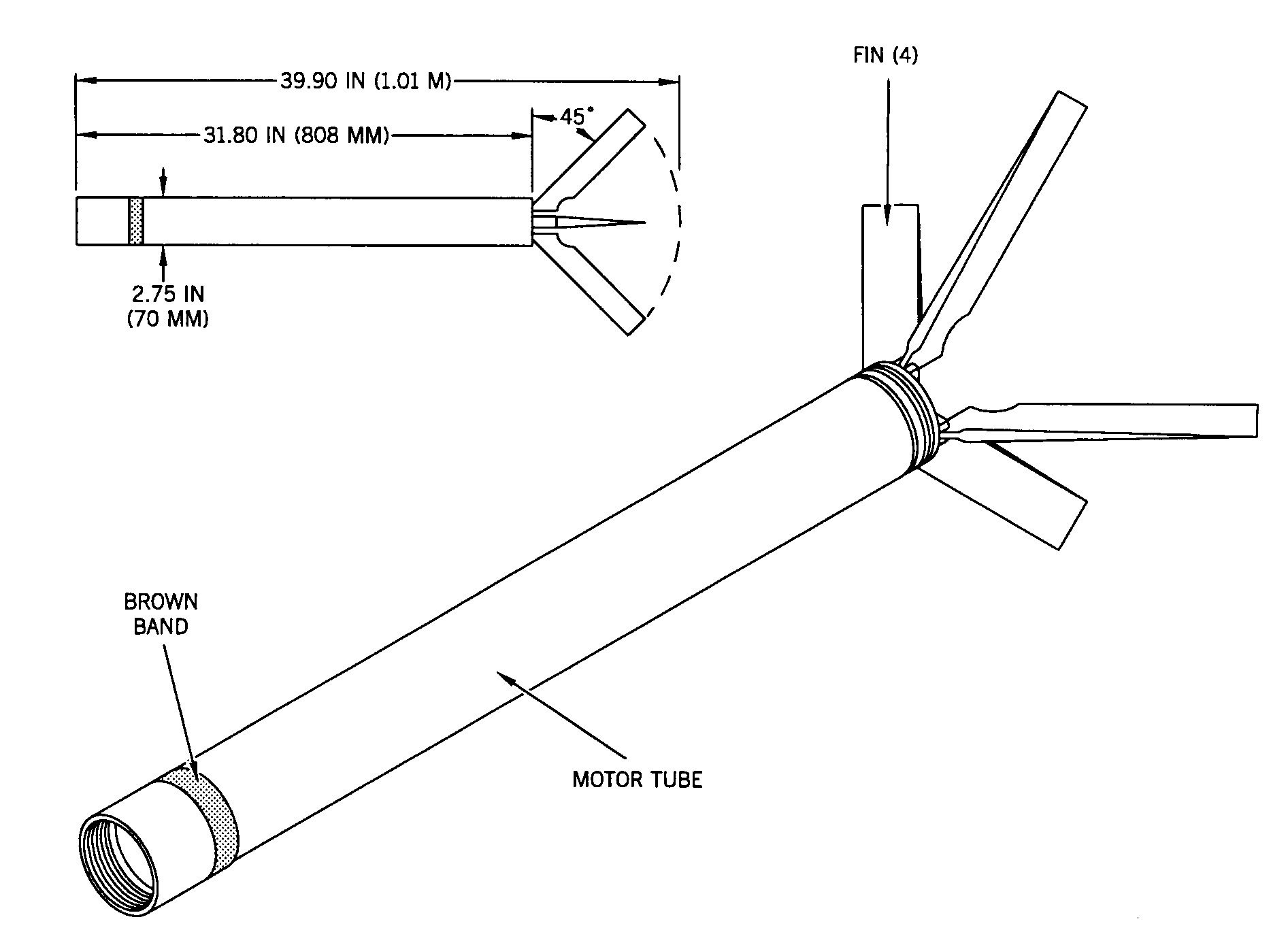
motors are used by rotary-wing and other low-speed aircraft.
Models 1 and 3 have integral bulkhead motor tubes; Mod 0 has a nonintegral bulkhead tube. The igniter of the Mod 3 motor differs from that of the Mods 0 and 1 motors in that the igniter has been modified to incorporate a carried, frangible case in lieu of the blowout plug and the squib is located on the periphery of the case in lieu of at the center of the case.
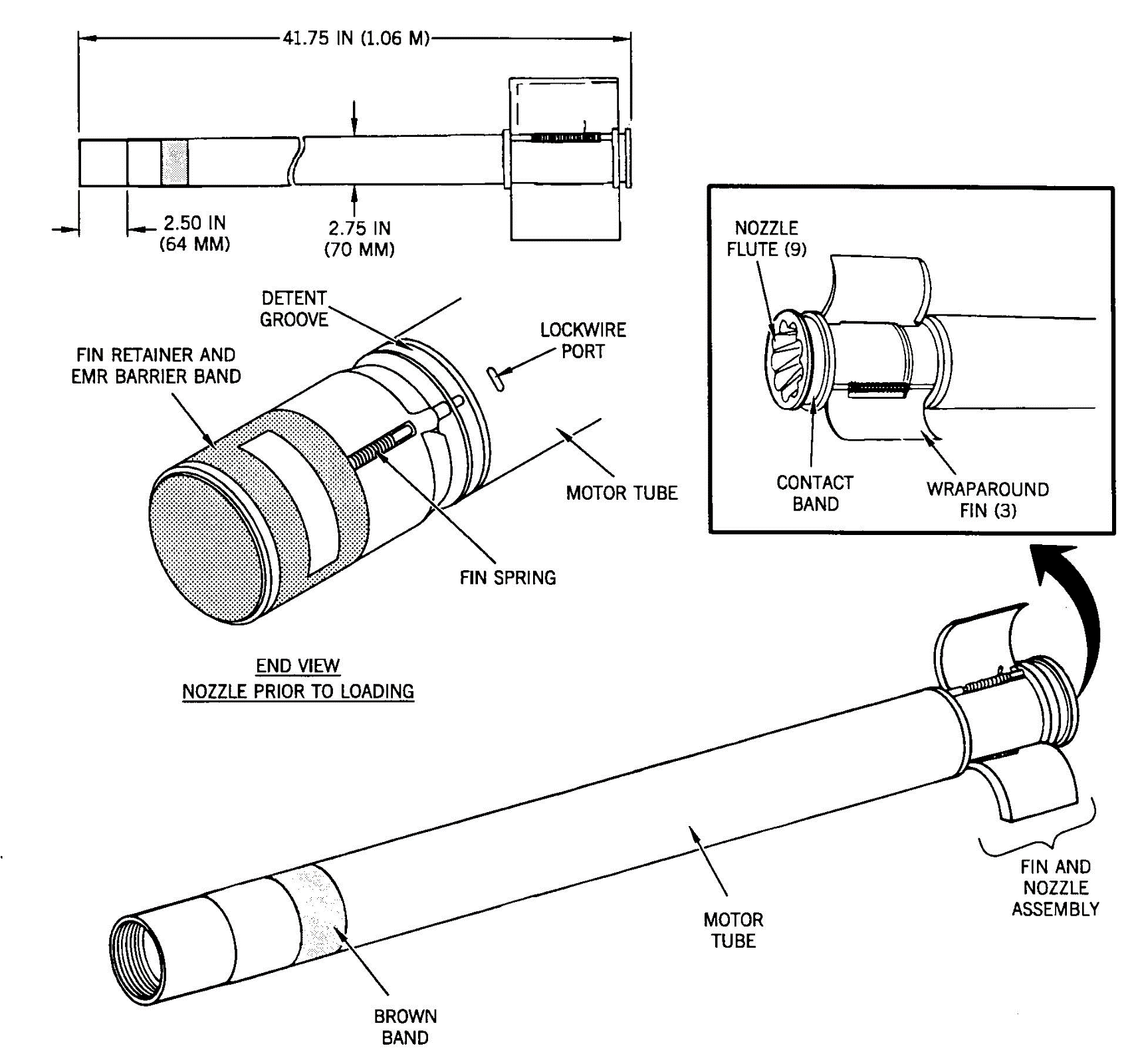
Description
The motors are used by rotary-wing and other low-speed aircraft; they may also be used with high performance aircraft.
The MK66 motors utilize a longer motor tube (than the MK40) of a different aluminum alloy, and a new nozzle and fin assembly. The fins are of a spring loaded, wrap-around design and are attached around the circumference of the single nozzle. The propellant grain is longer and of a different formation than the standard grain; however, the stabilizing rod and igniter are essentially the same as used on the MK40 motor. The MK66 motors have a substantially higher thrust, 1300 lb, and a longer range. The MK66 Mod 0 was developed by the Navy but never fielded.
The MK66 Mod 1 motor is a nozzle modification of the Mod 0 to increase the spin rate from 4 – 5.5 rps to 9 – 10 rps (at launch) for increased accuracy and provide interface with existing and improved launchers. A detent groove has been added forward of the wrap-around fins.
The MK66 Mod 2 motor is the same as the Mod 1 motor except that it contains a Hazards of Electromagnetic Radiation to Ordnance (HERO) filter which allows it to be handled and stored in electromagnetic radiation environments.
The MK66 Mod 3 motor is physically and functionally the same as the Mod 1 motor except that it has a radio frequency (RF) filter in the firing circuit. The filter is physically located on the igniter can. It also has a metallic brass shield over the fin and nozzle assembly to shunt any arc formed during loading/unloading rockets into or from the launcher. The RF filter resists inadvertent firing by stray RF currents.
The MK66 Mod 4 motor is an improvement on the MK66 Mod 2 motor and is tri-service compatible. Changes include a new E3 filtering system located under the contact band, a new initiator, a new igniter, and a new stabilizing rod and attachment assembly. The new ignition mechanism reduces variations in ignition delay time. The bare MK66 Mod 4 motor is considered Hazards of Electromagnetic Radiation to Ordnance (HERO) safe without special precautions. The MK66 Mod 4 motor is also considered safe in Electrostatic Discharge (ESD) environments.