
CLOUD SEEDING
Cloud seeding is a form of weather modification, a way of changing the amount or type of precipitation that falls from clouds, by dispersing substances into the air that serve as cloud condensation or ice nuclei, which alter the microphysical processes within the cloud.
The most common application of cloud seeding is to increase precipitation, possible with both warm and cold clouds.
There are two primary methods employed to stimulate precipitation.
- hygroscopic seeding, affects warm cloud loading processes.
- glaciogenic seeding , initiates cold cloud processes.
Though occasionally both techniques may be helpful, in most cases one can be utilized more effectively than the other. In addition, either technology can be applied from the surface (ground-based) or from an aircraft.
Cloud Seeding Increasing Precipitation
¨ Cloud seeding refers to an attempt to modify the weather by changing the amount of precipitation that falls from the clouds. Through the process, substances are dispersed into the atmosphere that will alter the amount of condensation that takes place within the clouds.
¨ It is usually done to increase the amount of snow or rain that falls from the clouds, although it can also be used to suppress fog and hail around airports.
¨ Cloud seeding has been used to try to prevent precipitation too. Airports use it to dissipate fog. Before the Beijing Olympics, Chinese authorities used cloud seeding to ensure clear skies for the events.
Mitigate Hail damage
Cloud seeding can be used as a tool to help mitigate hail damage and protect crop yields, homes and other property, thus reducing the economic harm from disastrous storm damage. Since hail is itself ice that is produced only by vigorous convective clouds, it is certain that such clouds are cold enough to be amenable to glaciogenic seeding techniques. Hail develops when excess supercooled liquid water develops within strong updrafts. However, if the excess might be induced to freeze into large numbers of small particles rather than much smaller numbers of large particles, the ice that does precipitate may melt during its transit through the warm sub-cloud layer, or if it doesn’t it will reach the surface as much smaller, less-damaging, ice.
Anti- Hoarfrost
The pyrotechnical smoke generator shows excellent characteristics in cases of impact in real conditions in the places, where the conditions for the hoarfrost formation of radiation and advective-radiation type exist.
Pyrotechnics for AHR 600 has a combined effect over the surface layer at the application zone:
¨ Accumulate an additional amount of heat by the combustion of a pyrotechnical composition, thereby raising the temperature of the surface layer at the application zone;
¨ The generated smoke creates a “greenhouse effect” in the surface area, thereby preventing the radiation (infrared) emission from the ground soil, preventing the quick cooling of the surface;
¨ In case of a temperature inversion in the area of application, the directed smoke jet, produced during the operation of Pyrotechnics for AHR 600 facilitates the creation of turbulent processes where the higher “hot” ground atmospheric layers mix with the lower ones, thus allowing an effective heat exchange.
Types of Cloud Seeding:

¨ Aerial Cloud Seeding.
Aerial cloud seeding loading is the process of delivering a seeding agent by aircraft – either at the cloud base or cloud top. Top seeding allows for direct injection of the seeding agent into the supercooled cloud top.
¨ Ground-Based Cloud Seeding
Specialized air operation for impact on meteorological conditions.
The goal is to insert a cloud-reagent into the kernels in potentially hazardous areas to form ice chips and fall into the hail-like surface. It is carried out in two ways – with the use of stationary devices installed on the ground, and by aviation means (light aircrafts or UAV).
The most effective combination is to combine three options.
To accomplish this activity, it is necessary to create and develop a comprehensive, unified structure, including separate components, with clearly defined functions, links and coordination with state structures and institutions operating under uniform rules, with organized logistics and communication support: The structure should include
– Base Airport
– Weather radars to provide RLI
– Communication system and provision of Weather information from radars
– Logistics support
Necessary tools to provide the services
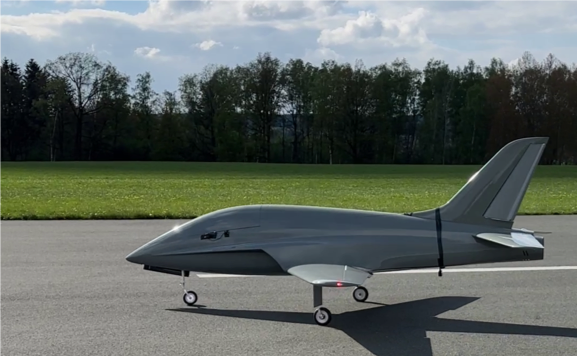
When there is a lack of sites for launching anti-hail rockets, the “airplane and UAV methods” is the only possible and effective methods to bring ice-forming reagent into the hail-bearing clouds. Preferable is the UAV one
Company products
¨ Flares for Rain Enhancement Pyrotechnics for AHR 1000
CaCl2 Hygroscopic Burn-In-Place Weather Modification Cloud Seeding Flares. This cloud seeding pyrotechnic flare is designed for warm clouds. The aerosols produced by the hygroscopic flare are the proper size to stimulate a particular cloud to start the rain process sooner and last longer.
¨ Anti- Hoarfrost – Pyrotechnics for AHR 600
In order to attain good and reliable results in the fight against hoarfrost, the application of Pyrotechnics for AHR 600 should be adapted to the respective landscape and microclimate characteristics in the impact area. When planning the activities should be taking into account the presence of mountains, hills and other heights, the presence of water basins and prevailing winds of a local significance.
|
Characteristics |
Flare for Anti- Hoarfrost flares 600
|
|
Length мм |
515 |
|
Weight kg |
1,5 |
|
Diameter мм |
60 |
|
Burning time min |
12 |
|
|
|